No products in the cart.



Grammy winner Jason Isbell is suing a Cambridge-based AI music platform. Here’s why.
The Aug. 31 lawsuit is one of the latest in a string of suits against Suno, Inc.
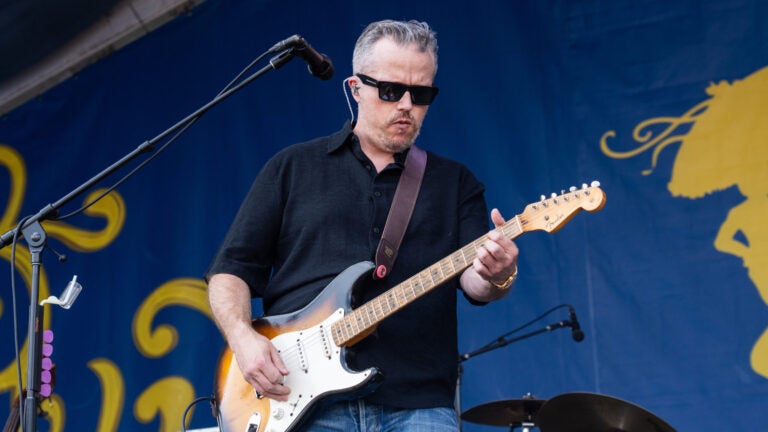
Jason Isbell, a six-time Grammy winning singer and songwriter, and three other artists recently filed a class action lawsuit against Cambridge-based AI music generating platform Suno for the commercial exploitation of their identities, the lawsuit alleges.
Suno users can type an artist’s name into a prompt and generate a song inspired by the artist, along with a description of the artist’s attributes and a related image, the Aug. 31 lawsuit alleges.
Now, the plaintiffs — Isbell, blues musician Guy Forsyth, saxophonist Eduardo Calle, and musician David Lowery — are asking the U.S. District Court for Massachusetts to stop Suno from exploiting their identities and award damages.
Advertisement:
The lawsuit is one of the latest in a series of suits pitting Suno against the music industry dating back to 2024.
“Jason Isbell’s musical identity does not cease to be his property merely because sophisticated technology is involved,” the lawsuit reads. “[Suno’s model is] a distillation of the identifying attributes of the human beings who made the songs.”
Attorneys representing the plaintiffs declined to comment when reached by Boston.com.
Attempts to reach Suno by Boston.com were unsuccessful, but the company wrote in a statement to Rolling Stone that the claims are “without merit” and intends to defend against them.
Advertisement:
“Suno exists to help people create new, original music, not to trade on anyone’s name,” the statement in Rolling Stone reads. “We stand by the many protections we have put into place across the platform, including blocking prompts for specific artists’ names or copyrighted songs.”
The lawsuit
Suno, which is headquartered along Dunster Street near Harvard Square, began in 2022 and now boasts over 100 million people who have made music on the platform, according to its website. In order to create music on the platform, users can describe the song they want written and Suno’s AI will generate instrumentation and vocals, according to its website.
However, Isbell’s lawsuit says Suno used the work of “practically all musicians on the internet” to train and operationalize their AI models.
While Suno says it blocks prompts for specific artists’ names, examples in the lawsuit say otherwise.
For example, the lawsuit says that searching “Jason Isbell” allegedly created an Americana song called “Paper Bell,” which evoked Isbell’s vocals and twang. Isbell is a three-time Grammy winner for Best Americana Album.
Even when the mechanism to block artists’ names works, the lawsuit says users can get around it. For example, using spaces to type out “m i c h a e l j a c k s o n” allegedly creates a pop-funk dance song called “Glovebox Moonwalk,” evoking Jackson’s famous white glove and dance move, according to the lawsuit.
Advertisement:
The lawsuit is centered around artists’ right to publicity — an individual’s right to control the commercialization around their individual characteristics, such as name, image, and likeness.

But what’s the difference between these AI music platforms and an artist writing a song inspired by their favorite bands?
Christopher Wares, assistant chair of the music business/management department at Berklee College of Music, told Boston.com these platforms are going beyond the simple influence of a music style.
“It’s influenced by specific melodies …specific lyrics … specific vocal stylings and original expressions,” Wares said. “That goes much deeper.”
Historically, if an artist wanted to write a song heavily inspired by another artist, Wares said they would still need permission.
AI’s future in music
Isbell’s lawsuit is just one way artists and record labels have litigated against Suno and other generative AI music platforms.
Several major record labels, including Sony, Universal, and Warner, filed a lawsuit against Suno in June 2024 alleging copyright infringement. While the lawsuit is still ongoing, Warner separately settled and created a partnership with Suno in November 2025.
That partnership is part of the basis for Suno’s v6 model, which the company says it developed with industry partners. Suno released the new model Sept. 9.
Advertisement:
“We believe this is a blueprint for how AI and the music industry can strengthen one another and build entirely new product experiences for artists, fans, and the broader music community,” Suno wrote in a news release.
A June 2025 lawsuit alleged Suno violated the Digital Millennium Copyright Act by going around protections to access copyrighted work used to train their model.
In July, a German court delivered one of the first major rulings against Suno, saying the company infringed on copyrights, Forbes reported.
In light of the various lawsuits against Suno, Wares said the music industry will soon need to establish rules with AI about “permission, identity, attribution, consent, and compensation,” as well as “preserving human creativity.”
“We haven’t quite figured out what those frameworks look like. We’re experimenting. The industry is experimenting,” Wares said. “For me, it’s always going to be, no matter what, artist first.”
Sign up for the Today newsletter
Get everything you need to know to start your day, delivered right to your inbox every morning.



 Boston Live News