No products in the cart.


They Might Be Giants talk their Mass. beginnings, Dunkin’ campaigns, and embracing creative challenges
In support of April’s “The World Is to Dig,” the band will play Boston’s House of Blues on June 5 and 6.
John Flansburgh and John Linnell are familiar faces around here.
The duo, known jointly as They Might Be Giants, has long called New York home, but in the days roughly 24 albums ago, the two were bonding over cartoons, vinyl records, and more while on the staff of The Promethean student newspaper at Lincoln-Sudbury Regional High School.
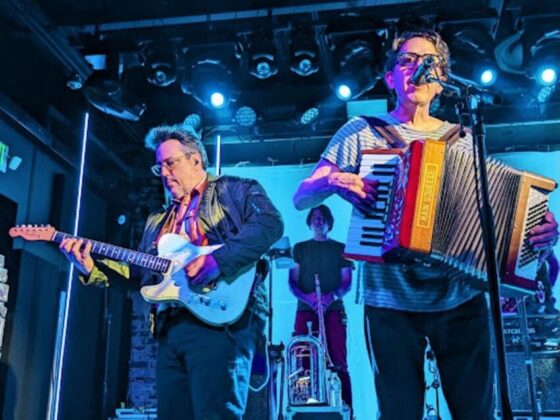
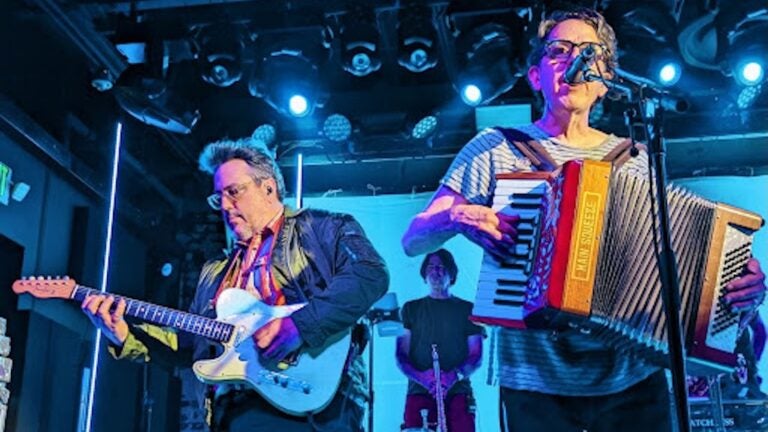
It was there that both Johns developed a common taste for music and art and sowed the seeds that would, shortly thereafter, form one of the most forward-thinking and inventive indie bands of the modern era. Now, They Might Be Giants returns to Boston to play two shows at the House of Blues on June 5 and 6.
Advertisement:
These evenings come with the promise of two sets, an eight-piece band including a trio of horns, an opening set spotlighting a different album in full each night, and no repeats between the two respective shows. Sprinkled across both setlists will also be selections from the band’s latest record, “The World Is To Dig.” Released in April, the album sees They Might Be Giants’ experimental proclivities paying off once again, pendulating from baroque to Beatles-y, existentially anxious to complacently present.
Ahead of these shows, Boston.com caught up with They Might Be Giants’ John Flansburgh to recount the band’s Metro West beginnings and to dig into their latest tunes.
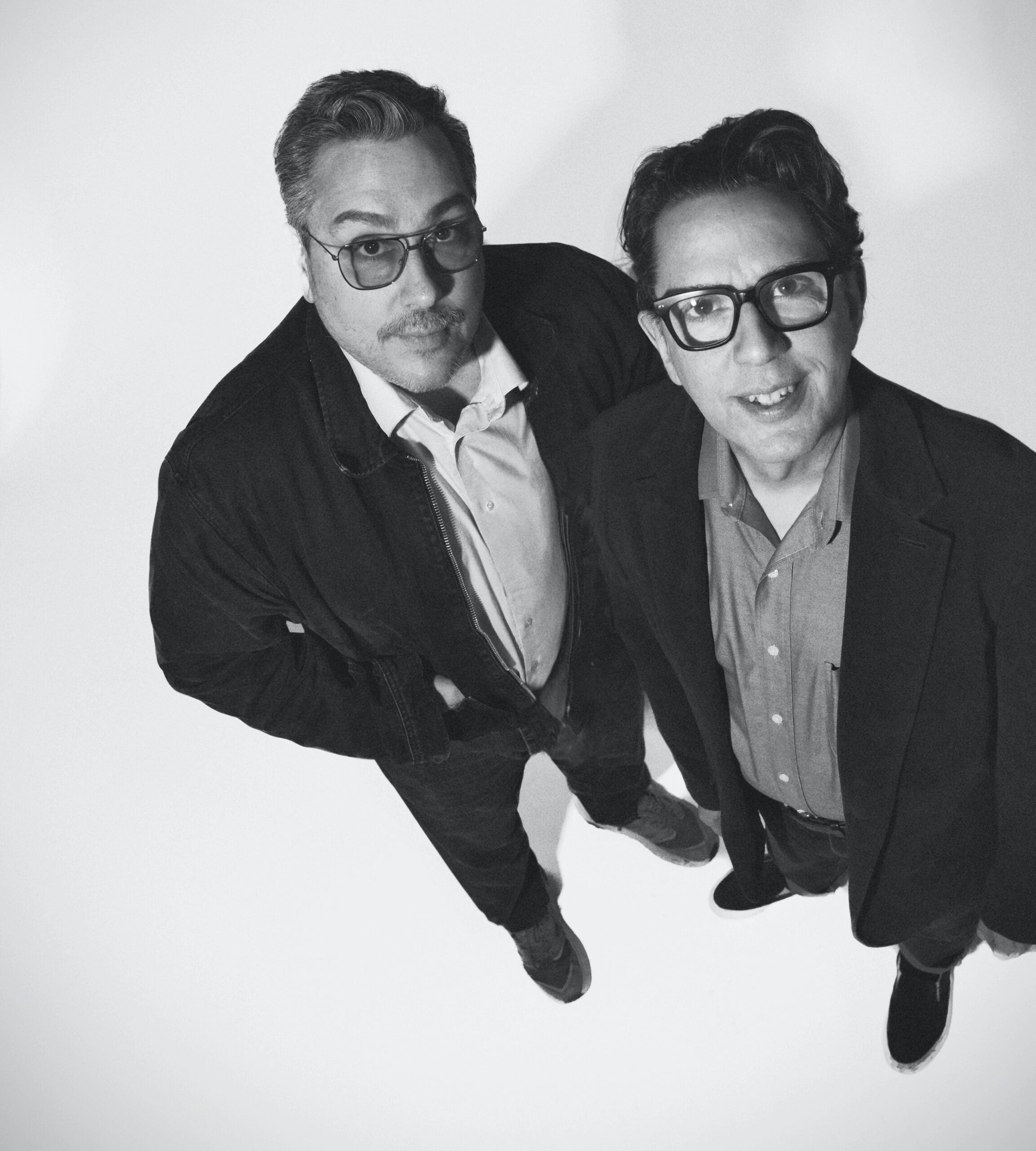
Boston.com: I’d love to start by going back to your local roots — you and John [Linnell] met each other at Lincoln-Sudbury High School. How did that relationship come about? What was that like?
John Flansburgh: Well, actually, I knew of John when I was in grade school, but he’s a year older than me. Every time I listen to some Beatles documentary and they’re talking about Paul McCartney and George Harrison, I think I understand the relationship that I will forever be a year younger than John Linnell. It kind of informs something abstract about our relationship, which seems ridiculous. Now, we’ve been in the same band for 45 years and yet he’s still a year older than me, so I’m always sort of trying to justify my existence in our partnership.
I knew of him as a grade school kid, but we became friends working for the high school newspaper. I actually started doing graphic design stuff for the paper. We would have these weekends where we would physically lay out the paper because everything was done sort of photographically. There was some computerization — the actual output of the text was computerized — but then you’d sort of chop it up with X-Acto knives and paste it up and add where the photographs were going to go and do all that jazz. And so that was the thing—some kids are in the drama department. We were like the newspaper kids. So that was kind of what brought us together. That, and we both drew cartoons.
All of us, our friends and John and I, were all obsessed with the rock music subculture and those things were heavily a part of the newspaper as well. It was kind of the era of Creem Magazine and Rolling Stone and there was a lot of crazy writing about rock music. It an extension of the rock subculture, which was very dominant then. I’m sure there are meaningful subcultures now, but I mean, people talk about there not being a monoculture now — the idea of a dominant subculture is something that seems even further away.
Advertisement:
I have a copy of Rolling Stone Magazine from like 1971 or ’72, which is actually a little bit before my time as a teenager. But there are articles about the Jefferson Airplane and about David Crosby and both are very casually referring to the “revolution” that’s coming. And they’re not speaking metaphorically. They’re really talking like, “Oh, when the world changes very, very soon all will be different.” So it makes you realize like, oh wow, that really was a long time ago.
What was the Lincoln-Sudbury music scene like when you were growing up? Were there local bands that you would see?
It was exactly what you think. There were bands that played at dances and they were cover bands. John was in the high school band, the marching band. [There was this] tension between “doing something that could get you shows” versus “what couldn’t get you shows” that was already kind of in play — an idea that you’re doing something that is commercial versus creative. It’s funny how you kind of bump into that almost right away, but it was actually something that the kids we knew would talk about.
We had one friend who had a band that was distinctly his and like, that band was not going to get any high school dance gig, but it made them seem much more real because they kind of stood for something.
To throw a few bits of Sudbury music history at you that came up in my research: Sudbury was founded by an ancestor of James Taylor and family. Singer-songwriter Linda Chorney also attended Lincoln Sudbury. And your former Elektra labelmate Mike Gordon of the band Phish is a Lincoln-Sudbury graduate as well.
Oh, right, I’ve heard that. And in fact, I even saw an interview with him where he just mentioned in passing that They Might Be Giants were one of the only famous music acts to come out of Lincoln-Sudbury. But both John and I were actually from Lincoln, which is the tiny town next door. Sudbury is a much, much bigger place. Lincoln is basically, like, behind our house there was like a pig farm. Relatively, it was very non-residential.
This is some real lore, but I have a friend of a friend who claims to have a library book that was checked out by Mike Gordon of Phish from the Lincoln-Sudbury Library. I was wondering, if one were to go searching for a John Flansburg autograph on a book card within the library system of Lincoln, Massachusetts, where might one start in searching?
Well, I can tell you that if you went to the Lincoln Public Library and checked out almost any vinyl record in their vinyl record collection, which was only about five inches deep, I would say almost every record was checked out by both John Linnell and myself because records were kind of like some collective thing back then. A lot of times you couldn’t afford to buy every record you were curious about and so the records that were in the library, they were all up for grabs, so we checked them all out.
Advertisement:
I remember our library had the UN charity record that the song ‘Across the Universe’ was on like a year or two before it came out on a Beatles record. So it’d be like, “Check out this record. It’s got this Beatles song you’ve never heard on it.” And in fact, the song “Why Does the Sunshine? (The Sun is a Mass of Incandescent Gas),” which we did a cover of — it’s like this very information-packed, listy kind of song about the sun that sort of did like a Ramones version of this kids song — that album, Space Songs, was in the Lincoln Public Library. We didn’t own that record. We just knew that song from the library.
[embedded content]
The library really performed a very practical cultural function for us. It’s definitely how we heard about that stuff, and I mean, we covered a song that we first heard at the library.
Do you recall going to any concerts in Boston growing up or keeping up with any Boston bands of that era?
A friend of mine had access to making fake IDs. So I actually had a fake ID when I was like 16 years old and I had a driver’s license the day I could get it. And so we would drive his parents’ car and see shows at The Rat in Boston and I saw a ton of shows there, and I would bring in a little cassette recorder and record shows. The big show that I saw at The Rat that sort of became more notorious later was I saw The Cars’ second show. They had done one show at a high school the week before that my friend Jimmy had seen and he was like, “You got to see this band, they’re incredible. They’re totally fully … ” I don’t know what words he used to describe it, but it was like they’re … fully formed. They’re like a real band with a totally unique style that is self-defined. And sure enough, The Cars: They just looked like they looked. It’s funny, they looked like they were from New York.
Advertisement:
I had seen a lot of New York bands at The Rat: I’d seen Mink Deville and Robert Gordon and I’d seen other New Wave bands from New York City that had made the trek to the Rathskeller in Boston and they always just looked a little dirtier, they looked skinnier. They just had a vibe about them that was just like, “Oh wow, these guys are tough.” And The Cars really had that look. It was funny, you couldn’t understand a word they were singing, just the way the sound worked, which was actually even more mysterious. I really was like, “What are these guys all about?”
I think you guys are the only band that can rightfully claim that you helped popularize the phrase “America Runs on Dunkin.’” What do you remember about soundtracking a Dunkin’ Donuts campaign 20 years ago? What was that project like?
It’s funny because over the years we’ve done a lot of TV projects. We’ve worked in advertising, we’ve done things for television, we’ve done a few things for movies. But that was the dream job because the guy who ran it, this guy Tim Cawley, he was so smart about how he kind of doled out the work to us because he had a lot of ideas, but he wouldn’t get too specific. He would just kind of jam on simple, slightly crazy concepts and then throw them out at us and be like, “If any of these things are of interest to you guys, just like run with it.”
And the beautiful part was all the songs were like 30-second songs or 60-second songs for radio jingles, but they could really be about [anything]. He just wanted to have a very vivid slice of contemporary life that was sort of viewed in kind of a slightly sidelong way and he knew what we were capable of.
Advertisement:
He was absolutely familiar with the band and the tone that we would set, and I think he was very confident in us. I think working relationships like that — Dunkin’ was really the client and it had to work for them — but the fact that this fellow really felt like we were the perfect fit just made it click and it was a product everybody can believe in, and it was just a ton of fun. And then we ended up doing like — I’m not even sure what the final count was — I think we did like almost two dozen TV spots and like a dozen radio spots or more. There were so many things in play when we were doing it, because we would go into these recording sessions to record like six or eight songs in a day. And after a week of all-nighters, just trying to keep up with all the crazy ideas, it was just a ton of fun. It was really interesting.
[embedded content]
Hopefully you got plenty of ice coffee for those all nighters.
[Holds up a cup of iced coffee] It’s a product we live by.
Congratulations on the new record. I guess to start on a broader level, do you find that there’s a larger, singular concept behind the album?
Well, our records are really collections of songs that were created at the same time and the same place, and invariably there is a unifying vibe that you don’t even have to work too hard at because all the things in the world are kind of leaning in on you while you’re making it. And I think in general our impulse is to try to make them as kaleidoscopic as possible.
Advertisement:
It’s interesting, it’s unclear to me what makes a good album. It doesn’t have to be consistent with itself that much, but ultimately you can tell an album that hangs together in an organic way. I mean, I think at the very depths of the Bush administration years ago, we made a record called “The Else” and it had a very sort of hard edge to it, and that just came very naturally because of the times, but I don’t think we thought about it or realized it while we were making it — that it would add up to something so edgy sounding.
Whereas I think “The World Is To Dig,” for us, even down to the title — which maybe the title overwhelms the album at this point — but it feels like we’re trying to sort of hold back some of the pessimism of our times. It’s like we are still involved in this creative enterprise and we want to just celebrate that and celebrate what’s possible. And I feel like that energy is infused in the album kind of inherently, even though there’s some grumpy old man stuff in the album for sure. But I do think that there’s something about what we’re doing that is always reflecting the times.

And I certainly don’t mean this in a grumpy way, but in listening to it, it feels like an intentionally post-COVID album to me. There are a lot of themes around things like parasocial relationships and leaning into nostalgia and maybe some ideas of zombie apocalypses and that type of thing. Was that on your mind or do you think this was just kind of like you’re saying, a function of two guys writing music during and directly after a pandemic?
Well, sometimes it’s in the foreground and sometimes it’s in the background, but yeah, that’s the thing. It’s like we’re all in the world together and living through all this stuff. It very much was a post-pandemic record. I think it’s sort of inevitable. But how much of it is conscious? Not a lot. I mean, to us, the task of writing a song is already overwhelming enough. I mean, I respect artists who have big picture ideas and can organize their thoughts in ways where it’s like, “Oh, this will be a subset of this.” That’s very impressive to me. I just don’t know how to work that way. Just coming up with a good couplet is usually about all I can get out.
The song “Wu-Tang” deals with the idea of extreme fandom, which, in signature and great They Might Be Giants fashion, is written through the perspective of another person. If you were to rewrite that song from your own perspective, who do you think the subject would be?
Well, that’s the work of John Linnell. I don’t know how much John loves the Wu-Tang Clan. I think he does respect the Wu-Tang Clan a lot, but he saw some documentary about them and was really captivated by them, so it might not be as far from true as it might seem at first blush. I always liked A Tribe Called Quest, to be perfectly honest with you. I think they’ve got some very good beats and that is no small thing in my world.
[embedded content]
And on that same note of writing songs through the perspective of other people or objects, you guys really have a knack for that. I guess from the outsider’s perspective that feels like it’s a way harder way to go about songwriting. People always say ‘write what you know’ and you don’t quite do that when you’re writing through a different lens. Were there any people, songs, or bands that really influenced that style?
Well, I cite these two people a lot because I do a lot of interviews, but it’s amplified by the fact that it’s actually true, which is Randy Newman and Alice Cooper, who both kind of landed at the same time in the culture for me. Both wrote a lot of unreliable narrator songs. They’re writing from the point of view of a character. And I think when you’re first starting out writing songs, what makes that kind of writing easier to access is that it isn’t confessional. When you’re not confident enough to write a love song, like if you haven’t really been in love that much or thought about love that much, it’s a lot easier to write a crazy song about a crazy person and just let your imagination run wild.
Advertisement:
So it’s more just like we started writing in this way under the influence of a lot of imaginative singer songwriters, and I think we’ve stuck with it maybe in part because we’re a little bit shy of the first-person-singular part of songwriting. It’s a very easy way to avoid cliches because most songs are love songs and a lot of those love songs are slightly hacky. And then on the other side of things, if you’re just scared of putting too much of yourself out there, which anybody who’s new at something is, it’s a great angle on how to attack it.
Do you still find songwriting inherently challenging or do you have to create the challenge on your own?
There’s almost an inverse relationship as a writer to what the listener experiences. I think in the center of it all is sort of the concept of the popular song, which is like this incredibly durable idea. It’s a really tight-delivery mechanism for a good idea. Its verses and choruses and melody and harmony are incredibly persuasive, and you can do it very economically and still get the idea across. And as John Linnell once said to me, “People don’t know they want to be surprised,” which is something that I’ve thought about a lot ever since because I think it’s profoundly true. People do love to be entertained and the only way you can truly entertain them is by having some genuine surprise. It has to have a spark that’s coming from somewhere that is not overly familiar or it’s just schmaltz, it’s just sentimental, it’s just nostalgia.
All the music in a song has been played in some way or another. It’s really up to the writer to kind of shuffle it in a new way that is challenging enough to make it seem new. And that’s what’s curious about songwriting is like, songwriting is the domain of a million white liars. Every songwriter wants to think that they’re like the most original, that they’re doing something really different, but deep in their heart, maybe not even that deep in their heart, they all know that they got into it because they just liked some other song.
[embedded content]
Do you like the productive struggle of that or is it a pain in your butt?
Oh, it’s a blast. Writing songs is super fun and it’s like working in a dark room. You don’t think, “Oh, I am making this happen.” There’s always a component to it that seems like magic. You have a good idea, but the second you commit to it, it kind of leaves you. It’s very spark-y and very exciting. And that’s how easy it is to just blink and half your life is over and you’ve written a thousand songs and you didn’t even realize it.
Advertisement:
They Might Be Giants play Friday & Saturday, June 5 & 6, 7 p.m., at House of Blues, 15 Lansdowne St., Boston. $55-$191.
Sign up for the Today newsletter
Get everything you need to know to start your day, delivered right to your inbox every morning.

 Boston Live News