No products in the cart.


Lucinda Williams on Bob Dylan, her stroke, and how this ‘World’s Gone Wrong’
Ahead of three Mass. shows, one of the NYT’s “Greatest Living American Songwriters” talks about her new protest album.
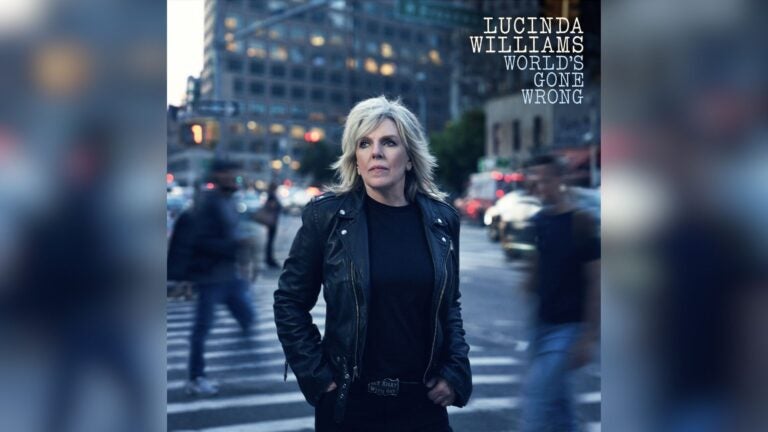
They don’t call Lucinda Williams the female Bob Dylan for nothing.
And it doesn’t get any more Dylan than borrowing a line — even if accidentally.
When I first read that Williams dropped an album titled “World’s Gone Wrong,” my immediate thought was it might be a hat tip to her hero Bob Dylan, and his 1993 album of covers, “World Gone Wrong.”
Williams’s album of mostly originals marks the three-time Grammy winner’s first album, for lack of a better word, of protest or topical songs. Maybe open-your-eyes songs. Or hope songs. It’s billed on her website as a “wake-up call and a battle cry.”
Advertisement:
When I called the singer/songwriter recently at her Nashville home, I asked if her title was a nod to Bob.
Turns out, it was a moment of panic.
“I’d forgotten about that album. Then my husband [and manager] Tom [Overby] said, “You know, Bob had an album called ‘World Gone Wrong.’ I was worried he was gonna get mad or something,” Williams, 73, tells me.
“Then we decided, ‘Okay, let’s calm down. Mine is called World’s — apostrophe — Gone Wrong. I had to be okay with that because we didn’t have time to change everything — think of a new title, change the album cover, redo the packaging.”
Advertisement:
She decided to look at it as taking a page from Dylan’s own love-and-theft playbook.
“I just decided: Every time you mention taking something from Bob, somebody says: ‘Well, you know, he’s taken stuff from so many artists, it’s not even funny,’” she says with a laugh.
After all, Dylan’s title is named after his cover of the old blues song called “The World Is Going Wrong,” recorded by the Mississippi Sheiks.
[embedded content]
And as for Dylan getting mad? He asked Williams to tour select dates with him this summer.
Both were recently named to the New York Times list of 30 Greatest Living American Songwriters. And while we can debate opinion-lists like these till the cows come home, those two belong there.
Williams’s now-classic 1998 album, “Car Wheels on a Gravel Road,” was inducted into the 2026 Grammy Hall Of Fame this month.
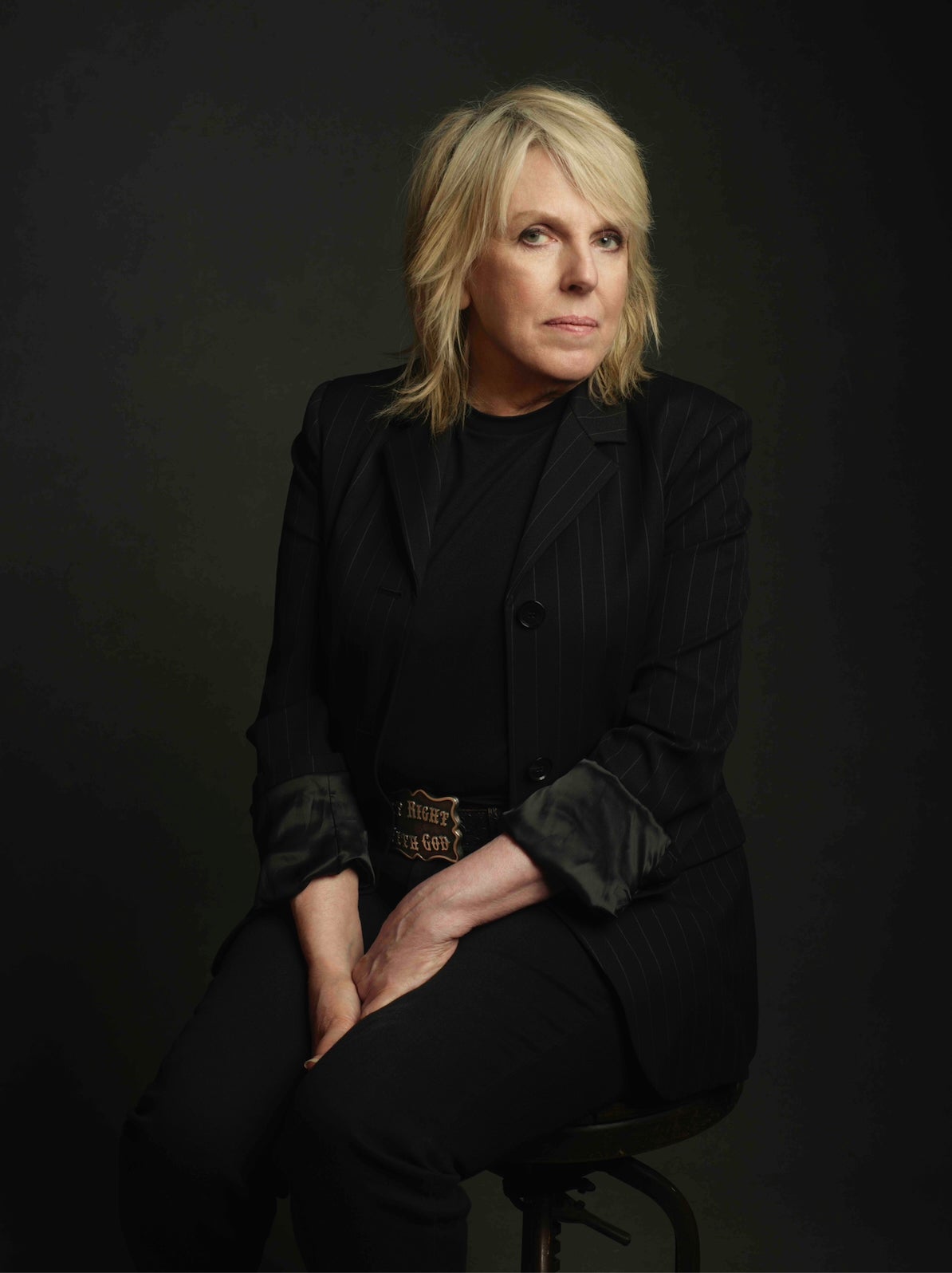
A songwriter’s writer, Williams’s catalog feels more like a poet who found a way to set words to music, in an industry that can so often work the other way around.
Her now-classics like “Lake Charles” or “Pineola” are lyrical gut-punches. But it’s her smoky vocals and ol’ Louisiana drawl that will first grab you. In our conversation, she pronounces “time” near to how someone with a thick Boston accent pronounces “Tom.” Taaaam.
Advertisement:
Born in Lake Charles, Louisiana, to the late poet Miller Williams and Lucille Fern Day, her father was her north star. She studied his work “like an apprentice.” It’s also, as she points out, where she gets her rebel spirit.
Standouts on her latest: the old-time bluesy “Black Tears” and the gospel-fueled Staples Singers-vibe “We’ve Come Too Far to Turn Around,” featuring Norah Jones on piano and harmony vocals. “How Much Did You Get For Your Soul?” feels inspired by Dylan’s “Masters of War.”
[embedded content]
One of the 30 Greatest Living American Songwriters plays three shows in Mass. this week: May 21 in Groton (sold out), May 22 at Medford’s Chevalier, and May 23 in Provincetown.
I called to talk her new album, old knees, Dylan encounters, the joy of Mavis Staples, the disappointment of CBD, and how this world’s (apostrophe) gone wrong.
Boston.com: I don’t need to ask what sparked the album. The songs speak for themselves here.
Lucinda Williams: Some people ask what prompted these songs. Well, the news, the paper, what’s on TV, every single day, all day. I’m always so surprised when they ask. I mean, have you been living in a cave? [laughs] I thought it would be obvious. It’s like, ‘Oooooh, she says some heavy stuff!’ Yes, because there’s heavy stuff going on. Come on. [laughs]
[laughs] But was there a specific incident in 2025 that was your breaking point, where you thought: OK, I need to do this album?
It wasn’t anything specific as much as it was this everyday, pervasive madness. The hell we’re going through. You can’t escape it. I’ve been wanting to write these kinds of songs for a while now. Ever since Bob Dylan’s “Masters of War” and all his other great protest songs from the ’60s, which I was influenced and inspired by.
Advertisement:
I was thinking of how it was back in the day. What happened to the people marching and demonstrating? Where’s the movement? I’m old enough to have experienced all that — going to demonstrations and marches. I remember the feeling of singing songs like “We Shall Overcome” with everyone. It was the feeling of unity, at the risk of sounding corny. I wanted to feel that again. I thought: Where’s my tribe?
So that’s when I started writing “We’ve Come Too Far To Turn Around,” because it kind of reminds me of a Staple Singers song.
It does feel that way. I love that you got Mavis Staples to sing on the Bob Marley cover: “So Much Trouble In The World.”
[embedded content]
I know! It was the best ending to it all, getting her. We’d become acquainted over the years. We’d run into each other at different music festivals and concerts— you meet her just once and she’s like your lifelong friend.
[laughs] I interviewed her just once, and I know what you mean.
That’s just her personality. She’d treat me like she was my aunt or something. She’d come up: “Lucinda!” She’d fuss over me. She never failed to remind me that Bob Dylan had asked for her hand in marriage once. She knew I love Bob Dylan. “You know, Bob asked me to marry him one time!”
[laughs] She told me the same thing. I love that story.
[laughs] She’s just a wonderful, delightful human being. I’m glad we have her, and that she’s still got that spirit she had in The Staples Singers.
They do feel like an influence here. Had you grown up listening to them?
Oh yeah. In those days, radio was better, and they’d play them on the radio along with Hendrix and whoever else. I loved them.
Who were some other major influences here?
Well, the songs Bob Dylan wrote.
It’s so funny that the title was a coincidence.
I know! I’d forgotten that album. And I’m trying to think of the name of that band he had — I have to ask Tom when he walks back in. I can’t remember stuff like I used to.
Advertisement:
God, sorry I just said that. I don’t want to be one of these older people who says “My knees are killing me!” Or “I don’t know where these young kids get all that energy!”
I say those things.
[laughs] You made me laugh. Thank you. It’s a gift these days, you know, if you can get find some laughter somewhere
[laughs] That’s true. And you’re also touring with Dylan on a few dates, which is awesome.
Yeah! We played the Outlaw Music Fest, with him and Willie Nelson. I’d like to think we made a good enough impression that it was on their minds. It’s an honor. I’m excited and nervous. Here’s the funny thing. You’ll get a kick out of this. Mavis told me this:
Somebody in the press, I guess — I’d been referred to as “the female Bob Dylan.” Well, apparently Bob caught wind of that. Mavis heard him saying, or he said to her, “Hey, there’s a female Bob Dylan out there!” Apparently he got a kick out of it. He didn’t know who it was. She said he was laughing and saying to his band and crew: “Hey, there’s a female Bob Dylan!”
At Outlaw Fest, we were told he wanted to say hi, and to go to the stage. And I brought it up: “You know that thing about ‘the female Bob Dylan?’” And he doesn’t miss a beat. He breaks into a big smile and goes, “Is that you?” In his best Bob Dylan voice. He points with his index finger. “Is that you?”
[laughs]
I smiled kind of sheepishly and nodded my head. And then he said, more quietly, “Who else would it be?”
Wow.
Exactly. Just: Oh my God. Every time I think of that — I guess he’s listened enough to my music and stuff.
You both do work in similar ways, though. More like poets who have found a way to put their words to music, rather than the other way around.
God, that’s such a compliment. Thank you.
It’s just the truth. Your dad was a poet and a major influence on you. You said your dad always told you not to censor yourself, which must’ve gone into this album?
Yeah, he meant, within a song, try not to feel self-conscious about using certain words to get something across. Or don’t worry: Is this going to piss somebody off?
You have to do that to write political songs.
Yeah, you have to do that to really write any kind of song.
True. Did you have any hesitation about writing these types of songs? Or did you just feel: I need to get this off my chest?
I remember sitting down to first write a topical song. I wasn’t sure how to get started. The words that kept coming to me were: love, peace, everybody hold hands and dance. I said, I can’t write a song like that. That sounds silly — butterflies and balloons and things.
Advertisement:
So I tried to think of topical songs that are simple and still really good. Like Buffalo Springfield’s “For What It’s Worth.” Side note: I heard Mavis cover that once, and she blew my mind.
Wow, I bet. How did you pick the Bob Marley song you cover with her here?
Tom suggested that because he loves Bob Marley. He’s a big reggae fan, and thought it would fit the record. That song was ahead of its time. That song could be a new song now.
Speaking of homages — “Sing, Unburied, Sing” is for Jesmyn Ward’s book?
That was another Tom Overby thing; he’s an avid reader. He loved it and gave me a copy to read, which is in my started-but-haven’t-finished stack.
[laughs] I’ve got one of those.
[laughs] There’s just so many good books. But yeah, we wrote that together.
Do you two do a lot of co-writes?
It just happened organically. I never would’ve thought I’d be writing songs with my husband. But it turns out he’s, he’s a pretty damn good lyricist. [laughs] He comes up with a bunch of lyrics to hand to me, I look at them, move them around a bit, form them into verses. We’ve got some pretty good songs out of it.
And Doug Pettibone [a frequent collaborator] has some co-write credits here.
Yeah, he jumps in sometimes when I’m at certain points and need guitar. I can’t play right now because of my stroke [in 2020]. It really hurts when I try to press on the strings. It’s excruciating pain. It feels masochistic, it hurts so bad. Everybody tells me to get CBD, which is supposed to cure everything from cancer to diabetes. [laughs] “Just rub this on your hands — no more pain!” But I haven’t found a solution yet.
Has the pain changed your writing process?
Yeah, I used to write more with guitar. Now I can make enough of a chord to get the note in my head, then I grab the voice recorder on my phone, and sing the melody in there. That’s when I usually get Doug.
What do you want people to get from this latest album?
Don’t feel alone. At the risk of sounding corny, there’s a light at the end of the tunnel. I still feel a sense of hope. Even with all the bad stuff, there’s still some signs of joy and prosperity. There are other places that are worse off.
Advertisement:
But I’d advise people to pay attention. It’s easy to become complacent. You’ve got your TV, your Oat Crunch Cheerios, or whatever. But the Gil Scott-Heron song, “The Revolution Will Not Be Televised,” comes to mind. We can’t afford to just stand there and be complacent.
Interview has been edited and condensed.
Lauren Daley is a freelance culture writer. She can be reached at [email protected]. She tweets @laurendaley1, and Instagrams at @laurendaley1. Read more stories on Facebook here.
Sign up for the Today newsletter
Get everything you need to know to start your day, delivered right to your inbox every morning.
 Boston Live News