No products in the cart.

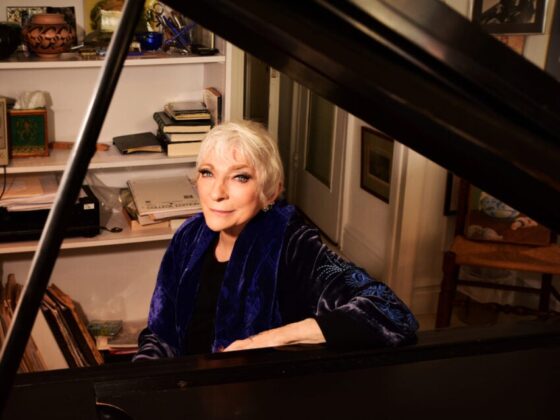

‘Let’s just call it a tour’: Judy Collins says her farewell tour isn’t a farewell
The former New Englander brings “Sweet Judy Blue Eyes” to Cape Cod and Tanglewood this summer with all-star pals — and to film a special.
Like Bob Dylan, Judy Collins needs to be on the road.
Work is life. Life is work.
“Some of us are like that,” she says, when reminded of the 85-year-old Dylan’s Never Ending Tour.
“I need to work. I tour all the time. That’s my life. I do 100 shows a year — I limit myself so I don’t go totally crazy,” Collins, 87, says in a recent phone interview.
So while her current “Sweet Judy Blue Eyes” tour is billed as a “farewell tour” — it’s not a farewell, she says.
Advertisement:
“Not at all. It’s another tour, let’s just put it that way,” Collins says. “Do you know how many ‘farewell tours’ everybody has done, including Peter Paul & Mary and The Grateful Dead? I’m right up there with the A-team.”
Catch the tireless folk icon with guitar genius Richard Thompson July 15 at Cape Cod Melody Tent, and July 16 at South Shore Music Circus in Cohasset.
She’ll also play Bar Harbor, Maine, Aug. 16 before capping her New England summer run at Tanglewood Aug. 30 with special guests Rosanne Cash, Mary Chapin Carpenter, and Amanda Shires.
Advertisement:
According to a press release, the tour will be “filmed for a forthcoming documentary on her life, music and legacy.”
This current tour will keep her on the road through March 2027 — two months shy of her 88th birthday.
Here’s what’s great about interviewing Collins: It always sounds like she casually picked up the phone to talk to a friend.
It’s easy to imagine her twirling an old-fashioned cord around her finger, gazing out a window. Conversation is peppered with “Anyway…” or “Well, of course…,” fascinating little asides, thoughts to questions unasked.
Going through Collins notes from over the decade, they’re peppered with gems, what I’ve come to think of as quintessentially Collins. For instance, on ditching her wig for natural hair:
“So I said to this audience, I just started wearing my own hair after losing my hair. I had a surgery on my hand [in 2017] and all my hair fell out from the anesthesia. For a long time, I wore wigs, which my sister hated. I think they looked fine.”
Or moments of candor, say, on her eating disorder and drinking: “My bulimia was going on for about 11 years before I got sober. I was still bulimic for about three days after I got sober in 1978.”
Advertisement:
In this recent interview, a question about New England stops leads to a rhapsody about North Carolina’s lush pine forest. (“Really worth going to.”)
That charm and candor may be why pal Graham Nash tapped her for his ’24 Boston show: “Graham Nash: An Evening of Songs and Stories with Judy Collins.”
“We sang together. It was great. We weren’t friends in the way that I was friends with Stephen, but look, he spent 45 years singing ‘Suite: Judy Blue Eyes’ — we have some connection,” she tells me with a laugh, referring to the song ex-boyfriend and longtime friend Stephen Stills wrote for her.
It would become a hit for Crosby, Stills & Nash — and is now word-play for her upcoming tour name.
“Why not?” she says.
Born in 1939, Collins grew up mainly in Denver, a child piano prodigy. She pivoted from Schubert to Seeger after traveling eccentric/folkie/WWII army vet T.D.A Lingo, a.k.a. “Lingo the Drifter,” came to town. (Dude’s worth the Wiki read — after you finish this article, of course.)
Lingo would visit her dad, play Woody Guthrie and Pete Seeger songs. Soon, Judy — not unlike ol’ Lingo — would start traveling around, singing folk songs.
Advertisement:
Since her first record in ’61, her magic ear has been a radar beacon for hits. Collins is credited with discovering Leonard Cohen. Her 1967 landmark cover of Joni Mitchell’s “Both Sides Now” was used powerfully on Season 6, Episode 13 of “Mad Men.”
[embedded content]
The Grammy Hall of Famer has also duetted with everyone from Willie Nelson to the Muppets. In February, she was inducted into Boston’s Folk Americana Roots Hall of Fame along with Neil Young, Jackson Browne, the late great Cohen and more, as part of the Class of ’25. Her first-ever album of originals, “Spellbound,” was released in 2022 — and she says she’s writing more now.
From her New York home, Collins talked New England memories, her love of work, life on the road, Stephen Stills, Joan Baez and more.
[embedded content]
Boston.com: You were in Newport last month, which is a special spot for you — you’ve played Newport Folk many times. Any favorite memories?
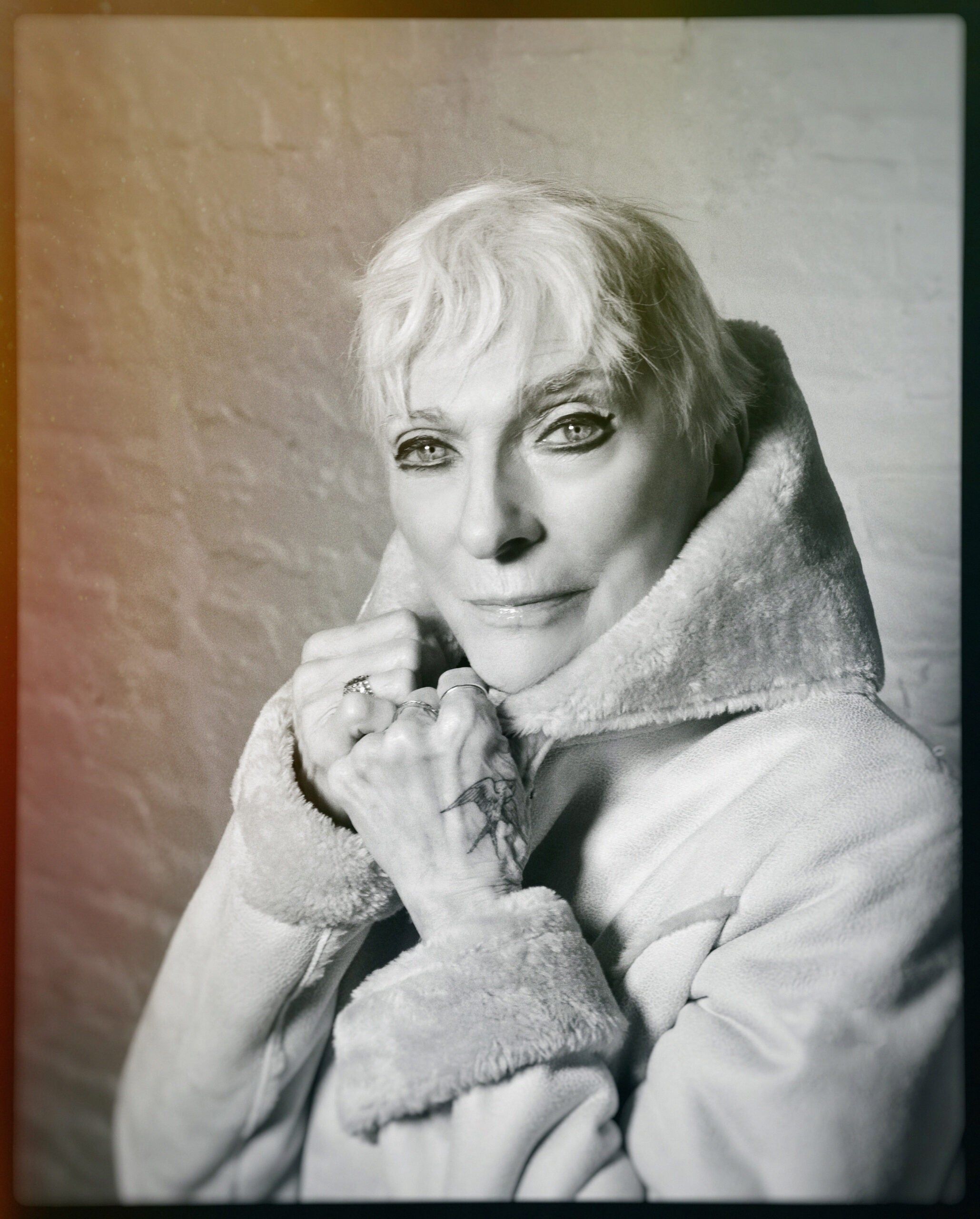
Judy Collins: Well, the first time I was there was in 1963. I had a lot of friends there, and a lot of fun. I [once] presented a show with Joni Mitchell and Leonard Cohen and a few other people. I was on the Board of Directors of the festival, and had already met Joni, and recorded “Both Sides Now.”
I pleaded and begged and fought for a show in the afternoon that would have Joni and Leonard on it. I wanted to get these new young artists out there. I had to fight my way through it, but Ronnie Gilbert and I fought.
Finally, I succeeded in getting an afternoon show — it’s got to have been ’67 because ’67 was when I heard Joni sing “Both Sides Now” on the phone in the middle of the night. I woke from a complete drunken stupor.
[laughs] Right, Somerville’s Al Kooper called you one night.
It was 3 a.m. and Al called me. He said, “I’ve met this woman named Joni; she writes songs; I heard this one and thought I better get her to sing it for you.”
Did you immediately know you wanted to record it?
Oh, of course. How could anybody not know that that was going to be a hit forever and ever and ever?
You’re credited with discovering Leonard Cohen, too.
He came to my house to play me songs. He said, “I can’t play guitar and I don’t know if this is a song.” Then he sang me “Suzanne.” I said, “Well, definitely this is a song.” I recorded it the next day.
[embedded content]
Wow. It seems like Leonard didn’t know he was a singer.
Right. I said, “You’re going to have to sing your songs.” I took him to a big fundraising event for WBAR. It was a huge concert in New York, and I pushed him on stage, and the first thing he did was stop. He fell apart and walked off the stage.
Advertisement:
I said, “Well, you’re going to have to go back and sing that song.” He did. After he heard the response, he came backstage, and said, “You were right! I can sing! I can sing!”
[laughs] That’s awesome.
I said, “Of course, you can sing! You’re one of the best singers I’ve ever heard, but you just don’t know your power yet.”
You told me you’ve spent 67 years touring. You must love traveling.
I love traveling. A lot of people don’t. I love driving. When I was in the backseat of the Buick and my father was on the road, I loved it. I got the whole backseat to myself. I’m the oldest of five, but at that point, I was the youngest of none. [laughs] I always had a good time traveling in the car, and I still do.
You grew up mostly in Colorado.
I moved to Colorado when I was 9 years old. I was born in Seattle, then we moved to LA, then we moved to Denver, and I got to be acquainted with the mountains. One of the most recent songs that I’ve written is called “When I Was a Girl in Colorado,” so you can tell by that that I mean it. [laughs]
[embedded content]
You were a piano prodigy as a kid, and fell for folk when T.D.A. Lingo came to town.
Yes! T.D.A. Lingo, God bless him. He brought folk music to Denver, and he brought it to me. He practically moved in with us. He would come over to the house and drink my father’s whiskey. He was an amazing guy.
You started piano at age 5. When did you know that you wanted to be a folk musician?
When I was 16. I started playing the guitar, and singing songs. “Gypsy Rover” was one of the most important ones of my early career. I write many, many of my songs now.
You started off playing traditional folk and interpreting songs. But you’re turning more to writing now?
Yeah. I started writing songs when I was 27 because I met Leonard Cohen. After I pushed him on stage and made him sing, he said to me, “I don’t know why you’re not writing your own songs.” I went over to my piano and wrote my first song: “Since You’ve Asked.” You know, people still want to hear that. It’s my very first, and it hit a chord, I think.
[embedded content]
When did you feel like you had made it as an artist?
Today! [laughs] Today, I have made it. Tomorrow, we’ll see.
I interviewed Joan Baez on her poetry book — she wrote a poem about you.
[laughs] I know. I wrote a song about her — “Albatross.”
It’s interesting because there’s a suggestion of pain in the person’s life in “Albatross.” (Imprisoned in your bones/ Behind the isinglass windows of your eyes/…And in the dark the hard bells ringing with pain.)
Oh yeah. Well, it was 1966 and I went to spend a couple days with her. I went home and wrote this song. I’ve always felt that I saw things in Joan that she now can talk about, but she couldn’t talk about then. [Baez has spoken openly and wrote a book about suffering abuse from her father.]
You also wrote some powerful books — about getting sober, your son’s death by suicide. In “Cravings” you wrote about your eating disorder.
You know, the first person I heard speak about bulimia was Princess Diana.
Nobody talked about it then.
No. And I don’t think people talk about it now. A guy I know was telling me about his problems with bulimia. You don’t think about men having that problem, but of course they do.
Advertisement:
So, I’m glad I was able to do that. My old friend [editor] Nan Talese published it in her imprint. She was my first editor for my first memoir: “Trust Your Heart” (1987). I’m afraid we’re at the age now where we lose friends. And it’s such a drag. [laughs]
I bet. You told me Joan Rivers reached out to you after your son Clark’s death with the advice to keep working. That “work saved” you.
Oh my God, she was so helpful to me. She said, “You cannot cancel all your shows or you won’t get over this.” And she was right.
I lost my husband [Nelson, 88, who designed the Korean War Veterans Memorial in Washington, D.C.] a year-and-a-half ago. So that’s been horrible. But you try to just get through it. Do what you have to do.
You were married 46 years. Do you find work helps get through this loss, too?
Oh God, yes. Oh, yes. It’s the thing to do. To work and to figure out how to deal with your life. Get on the road. It’s a wonderful thing to have the shows to do. Wonderful, wonderful.
This tour is “Sweet Judy Blue Eyes.” Do you remember when Stills first sang that for you?
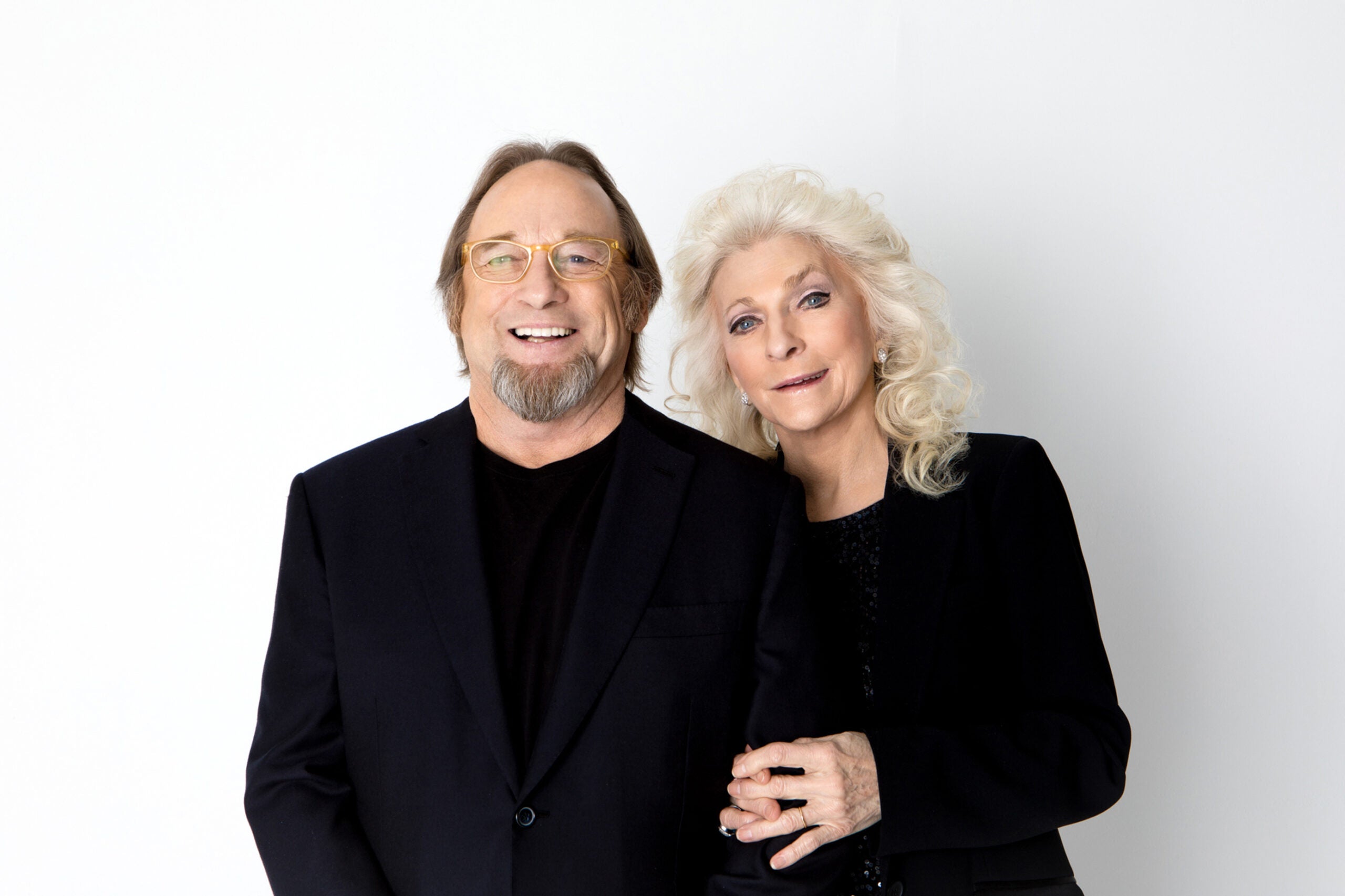
I do distinctly. It was May 1, 1969, my 30th birthday. He came to the hotel room with flowers and a guitar. I heard it and said, “Well, it’s beautiful, but it will not get me back.” [laughs] We’ve been friends for how many years now? Good Lord. A lot of years.
Any Boston memories that stand out?
A vivid Boston memory is when I first started living on the East Coast. My ex-husband — I call him my starter husband — and I moved to Storrs, Connecticut around 1960. I got a job in Boston, I think it was in 1961 playing at the Golden Vanity.
Advertisement:
I played there for two weeks, and met the guy who worked at Newport a lot, he did the groundwork. Anyway, for two weeks, I drove in from Storrs every night — a long way. The last night, I ran into a huge snowstorm, so I had to go home and bake cookies. [laughs]
[laughs] What was your time in Connecticut like?
Oh, I loved it there. We lived on a farm and had a wonderful old farmhouse, and we loved it there, and then we didn’t.
[laughs] Sounds idyllic at first.
It was. Lots of touring, but a lot of fun on the farm. We rented the house, and I got to appreciate all the livestock. My landlady taught me how to make wreaths with dried leaves, and made the best soup. [laughs] She taught me to make the best clam chowder ever.
Lauren Daley is a freelance culture writer. She can be reached at [email protected]. She tweets @laurendaley1, and Instagrams at @laurendaley1. Read more stories on Facebook here.
Sign up for the Today newsletter
Get everything you need to know to start your day, delivered right to your inbox every morning.


 Boston Live News