No products in the cart.


‘Disclosure Day’ review: Steven Spielberg uses alien interrogation to interrogate our alienation
Despite a shaky third act, Steven Spielberg’s “Disclosure Day” occasionally reaches the highs of his classic alien films like “Close Encounters” and “E.T.”.
Steven Spielberg’s newest movie “Disclosure Day” begins with a thunderous kick to the face. Opening with a point-of-view shot from the mat of a professional wrestling ring, a masked showman towers over the camera before unleashing a series of choke-slams, pile-drivers, and clotheslines as the crowd stands and cheers in unison.
The only viewer who doesn’t participate in the kayfabe is Daniel (Josh O’Connor, “Wake Up Dead Man: A Knives Out Mystery”), who we soon learn is a fugitive animated by the need to expose an alarming truth: Aliens exist, and the government knows about it. Moments later, government officials in red ballcaps materialize around Daniel. One issues an unsubtle command: Stand and clap like everyone else, and no one gets hurt.
Advertisement:
Spielberg has always used his alien movies to interrogate aspects of humanity, from the obsessive Richard Dreyfuss in “Close Encounters of the Third Kind” to the post-9/11 shell-shock and belligerence spurred by an alien attack in “War of the Worlds.” With “Disclosure Day,” the filmmaker again asks what humanity’s response would be in 2026 if given irrefutable proof of life beyond this planet.
Spielberg’s answer, revealed more than two hours later, is a bit simplistic and feels divorced from reality. But the journey he takes audiences on to arrive at that conclusion is undeniably thrilling.
[embedded content]
Daniel is on the run from his former employer, a shadowy agency called WARDEX that operates outside of traditional government org charts. Pursuing Daniel is WARDEX head honcho Noah Scanlon, played by Colin Firth in the register of a stuffy college professor with a steadfast devotion to his research and maintaining the status quo.
Advertisement:
WARDEX’s harnessing of alien technology to further its goals is so efficient that there’s barely any time for Daniel to explain what’s happening to his girlfriend Jane (Eve Hewson, “The Perfect Couple”) before agents are breaking down his door. But he manages to show her a small sampling of footage he has stolen from the department, including grainy video of aliens crash-landing at Roswell and scenes of brutal torture of the E.T.s for reasons left unexplained. It’s those “enhanced interrogation” videos that convinced Daniel to join a group of rogue employees led by Hugo Wakefield (Colman Domingo, “Sing Sing”), whose sole goal is a WikiLeaks-style data dump that will give the world’s 8.3 billion people “full disclosure.”
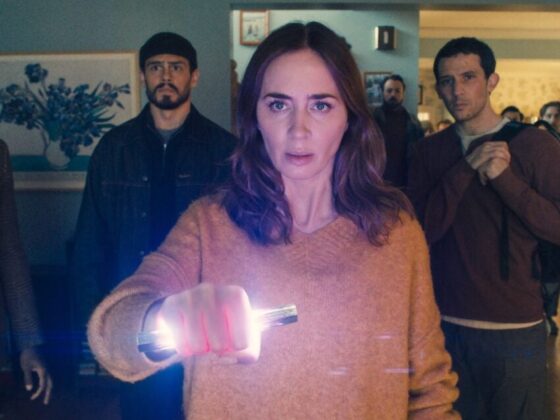
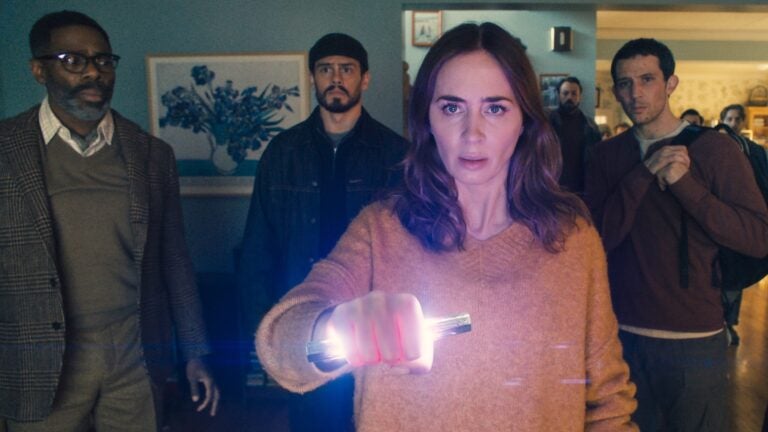
With the existence of aliens no longer in doubt, the film’s mystery (beyond whether the whistleblowers will succeed) lies in the exact nature of these extraterrestrials and the effects of their technologies. Specifically: How exactly does Noah use a small alien totem to climb into and then manipulate people’s minds? Why does Daniel have no memory of his childhood? And why does local meteorologist Margaret Fairchild (Emily Blunt) begin speaking in guttural clicks and hisses during a newscast?
Advertisement:
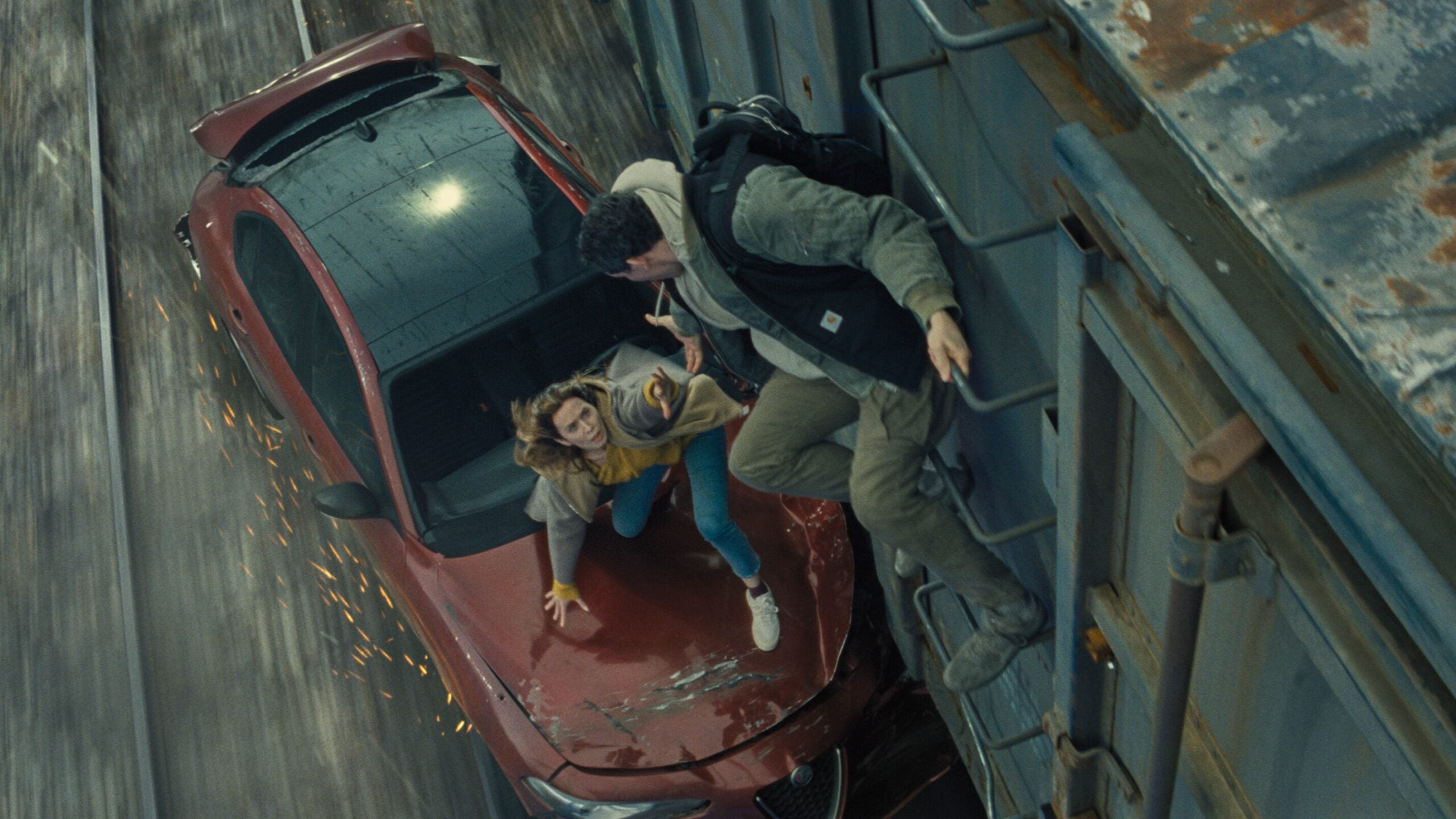
“Disclosure Day” has so many hallmarks of Spielberg’s 50+-year filmography, with scene after scene of plucky underdogs evading an oppressive authority set to a magisterial John Williams Score. One chase scene, involving a train, feels particularly inspired, and was apparently originally envisioned by Spielberg all the way back when he was making 1971’s demonic car chase TV movie, “Duel.” Generations of American audiences have been raised on Spielberg, and even when we can’t comprehend the alien dialect onscreen, we are innately comforted by our fluency in the director’s film language.
It’s Spielberg’s concern with the youngest generation of Americans, however, that leads “Disclosure Day” into its most wooden moments. In 2017’s “The Post,” Spielberg didn’t need to convince anyone in the righteousness of publishing the Pentagon Papers. In “Disclosure Day,” he seems less sure. What if we’re in a post-truth society, where full disclosure only leads to more lies? Will the proof that humans are not God’s perfect creations destroy the last vestiges of organized religion and further send the globe into a tailspin? Worst of all, what if no one even notices there are aliens because they’re too busy scrolling on their dang phones?
Advertisement:
Rather than trust the audience’s intelligence, Spielberg deploys the Netflix handbook by having characters over-explain the salient themes for screen-addicted viewers not paying attention. “Empathy is an evolutionary advantage,” Hugo tells Daniel. “I will not be anyone’s religion,” another character declares. The third act might as well feature an alien flying down to Earth to tell us to live, laugh, and love.
“Disclosure Day” may occasionally feel like a pastiche of Spielberg’s greatest hits, but for a director whose hits rank among the very best American blockbusters, that’s not such a bad thing – especially when the individual players shine so brightly. Blunt is notably excellent, playing a woman both thrilled and terrified to the point of mania about her transformative life experience. O’Connor, the louche lothario of “Challengers,” makes time for a few rakish grins in an otherwise grim role. And Firth is deliciously devilish as a man of science whose greatest discovery has damaged his moral compass.
“Disclosure Day” may not rank among Spielberg’s greatest sci-fi stories. But the moments when it even approaches the highs of “Close Encounters of the Third Kind” and “E.T.” make it more than worth your while.
Rating: *** (out of 4)
“Disclosure Day” is in theaters now.
Sign up for the Today newsletter
Get everything you need to know to start your day, delivered right to your inbox every morning.



 Boston Live News