No products in the cart.

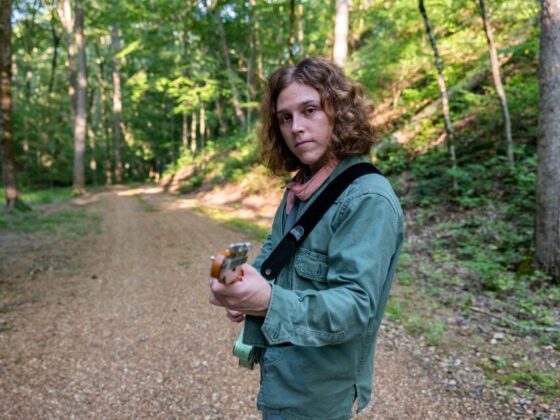

Inside the cosmic brain of Daniel Donato
From “Guitar Hero” to Guitar Hero: A video game hooked him to guitar. Now he’s one of the greatest live players in the game.
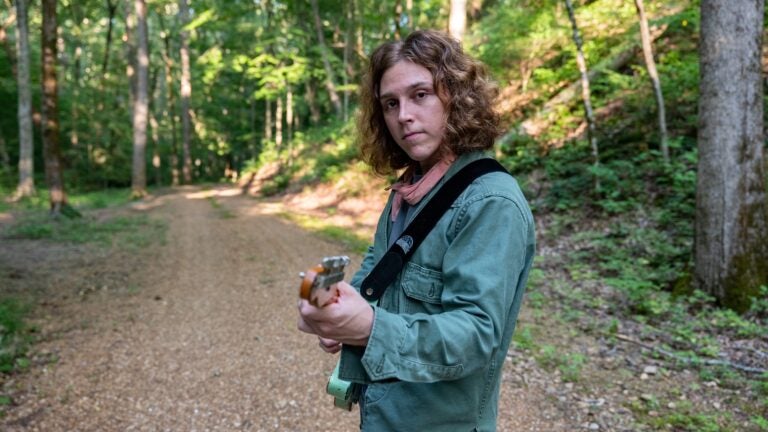
Before I get off the phone with guitar prodigy Daniel Donato, I toss one last simple question: Anything you want to add for Boston readers?
Most artists here say something friendly and pat. Donato, however, muses.
“I’m aware of how increasingly inconvenient it is to go to a show— parking, time, energy, money. I’m grateful for them because there’s a lot of other things they could be doing in Boston,” says Donato. “For them to come listen is a true blessing to me. I just hope to reciprocate the blessing.
“Live music means living music. It’s a living experience. And in the modern secular sense, it’s most people’s avenue towards a form of individualized worship.”
Advertisement:
The poetry of his answer was par for the course in our interview.
Donato’s brain seems to work on a different frequency.
Some answers are poems, and it’s remarkable to witness them form in real-time.
A guitar, he tells me, “can be your dojo, your altar, or your mirror.”
“Some people have a gift for words – Dostoevsky, Charles Bukowski, T.S. Eliot. But that wasn’t my medium,” he says. “With guitar, I was quickly able to express myself in ways that dialogical language doesn’t attain.”
The New Jersey-born, Nashville-raised kid got hooked on the Guitar Hero video game at age 12. In a few years, he was gigging in Nashville, notably at the iconic Robert’s Western World– and blowing minds. Within a decade, he’d be hailed in Rolling Stone and playing CBS Saturday Morning.
Advertisement:
I remember the first time Daniel Donato dropped my jaw.
It was this video.
Just a bushy haired kid, all pipe-cleaner arms, jamming with the Don Kelley Band at Nashville’s storied Robert’s, his “classroom,” as he puts it. He blows minds around 1:17. I love how the older guys watch and smile.
[embedded content]
His new live album, “Ryman to Robert’s,” marks a full-circle moment. Recorded live in 2025, it documents his debut at the hallowed Ryman Auditorium, and songs from the after-show at Robert’s: the honky tonk across the street where it all started.
A full-circle moment, I tell him.
“Totally,” he says. “It’s like the third part of Joseph Campbell hero’s journey, when the protagonist returns to the place they started, transformed and more radiant with truth and experience.”
[embedded content]
Donato’s speaking voice is gentle and twangy, and sounds younger than his 31 years. Singing, he sounds like a young Arlo Guthrie. Kinda looks like him, too. He’s speaking to me from an outdoor festival in South Carolina, and when he pauses to gather his thoughts on say, C.S. Lewis or Dante, I heard birds twitter for a beat before he waxes metaphysical.
Advertisement:
Donato is an artist best experienced live.
Catch him at Boston’s Royale Oct. 22 or Infinity Music Hall in Hartford, Conn. Oct. 25, to witness the magic, genre, ethos and band he’s dubbed “Cosmic Country.” We can also experience many live shows for free at Danielbase.com.
Cosmic Country is, well, what it sounds like. His “Angel from Montgomery” sounds like a funky Grateful Dead covering John Prine. “Working Man Blues” off his latest album sounds like a frantic Grateful Dead covering Merle Haggard with vocals from a young Arlo.
In a wide-ranging conversation, we talked C.S. Lewis, the Dead, 13th century texts, video games, Chuck Berry – and the necessary suffering of human existence.
I’m so intrigued by how you started out: The video game Guitar Hero got you started. Take me through your journey.
We moved from New Jersey on Christmas Eve. I was 7. The first morning I woke up in Tennessee, I found a guitar. But for years it just sat in my room.
When I was 12, the video game came out. My friends and I played incessantly. At that time, the iPod Nano is coming out. So a lot of Guitar Hero rock and roll finds its way onto my iPod. I wanted to learn how to play it. In fact, it called to me.
Advertisement:
What about it called you?
It’s an American artform. If you analyze, say, Chuck Berry, what you have is jazz drummers playing with an unsophisticated electric guitarist — because at the time electric guitarists weren’t sophisticated compared to the jazz players.
Right there you have the American ideal of blending working-class passion with the sophisticated nuance of jazz. That creates rock and roll, and a rhythm and a swing that only that genre has. Its cosmicity spoke to my soul.
Before that, what music had you been into?
Anything socially normative for a 12-year-old boy at that time — popular hiphop or pop. My dad always listened to rock and roll.
Your mom was a Deadhead.
Yeah, but I know some real Deadheads. I never saw my mom eat a falafel sandwich on Shakedown.
[laughs] OK.
But she did love the Grateful Dead. So does my dad.
Soon after you started the video game, you ask your dad to show you how to play the real guitar. What did you love about it?
I was able to communicate emotions beyond words, and I was able to do it right away, which is fascinating. It was there before any neurological technical skill, or any dexterity. I fueled my soul with it. I felt it was a strange, elusive, mysterious thing. I worshiped it, and I still do.
I’m looking at the same fretboard, same strings, every day. The guitar doesn’t get software updates. Yet the vibrations that come from the strings — the physics of that — creates my life. Brings people into my life. Calls me to the adventure.
Advertisement:
That’s beautiful. You started busking on Broadway– the famous Nashville Street. Lower Broadway is “Honkey Tonk Highway.”
Right. When I turned 14, my dad had this idea: ‘Hey kid, let’s go try to make a dollar. I’ll drive to Broadway and let’s see if anybody throws 20 bucks in your case.’ I discovered the music being played in the Honky Tonks – Merle Haggard, Wayland Jennings, Willie Nelson, Hank Williams. I fell in love with it.
Soon you started getting gigs. Robert’s was big for you.
Robert’s is a sacred establishment for me. It’s 24 feet from the Ryman, and it’s the home of traditional country music. Traditional, authentic country music tells stories of real enduring values and experiences in life– it’s not about partying.
Exactly. I can’t stand most new country, but old country — Hank Williams era and earlier— that’s something near spiritual.
There’s true sadness in Hank Williams. There’s theological claims in Marty Robbins songs. There’s the working man’s dream found in Merle Haggard. When I went to Robert’s, all that introduced itself to me. I played 464 shows down there.
Wow. You mentioned the guitar as a dojo— Robert’s sounds like your training gym.
And classroom. My curriculum was on stage with working musicians. There’s a different urgency and energy you have to bring when it’s how everybody is paying for their life.
Advertisement:
Right. This is paying the bills.
The list could go on in terms of how to qualify that experience. It’s inexhaustible inspiration.
I read that Sturgill Simpson inspired you to start writing. How did that happen?
I remember when he used to work at the Turnip Truck, a farm-to-table grocery store downtown. I’d see him play around. He always stuck out to me. When his [2014] record “Metamodern Sounds in Country Music,” came out, lyrically, he was talking about Eastern philosophy, Western theology, the psychedelic experience. But the production sounded like they recorded at Robert’s— no autotune. It just inspired the hell out of me!
[embedded content]
I was playing in other people’s bands as a hired gun. But there was a bandwidth– a ceiling I was hitting. So I did the old Kerouac approach: got on the road and headed West. That fateful step is on the same trail that leads me to speak with you today.
You’re one of those artists whose magic is best captured live.
And thank God for that. [laughs] Because it doesn’t seem obvious that anything could ever get in between an audience and a performer. It’s hard to replace that.
Now, people who find their success and leverage their notoriety based off recorded music—that’s a terrifying domain going through a big evolution right now.
True. Technology will always change the recorded landscape — but I can’t see anything replacing that feeling of standing in the same room as an artist. You tour so much. What’s life on the road like?
Advertisement:
It’s what you make it, to be honest. And you’re better off making it something because otherwise, what gets made for you is hell. And the definition of hell for me is the unnecessary suffering compounded on top of the necessary suffering of existence. Everyone has suffering — but that’s not hell.
There’s a sophisticated theological claim Dante is making in “The Inferno.” One claim is hell is completely voluntary. And I’m not suggesting that hell is a geographical place, but symbolically, hell is voluntary. Heaven is voluntary. Suffering is necessary. You’re always going to suffer.
And touring is full of the tropes of suffering — lack of sleep, never home, food is tough. But it doesn’t need to be hell. It can be heaven.
The way I see it is: I used to get paid 50 bucks to gig where crowds didn’t care who was on stage. Now people spend money, time, and valuable energy to come see me. I have no reason to complain.
There’s some deep truth in what you just said. I have to say: throughout our conversation here, there’s a power to the way you phrase things. You strike me as a big reader.
Oh yeah. Right now I’m reading C.S. Lewis’s “Out of the Silent Planet.” It’s a pre-Narnia text [1938 sci-fi novel]. He was able to talk about theology from a unique perspective. He wasn’t preaching, yet was able to activate archetypes latent within the biblical corpus, and adapt those archetypes to his own narratives. He has a way of seeping into your imagination, like George Lucas, but he’s talking about the most fundamental elements of reality. He’s brilliant.
Advertisement:
What’s the feeling you get when you play guitar?
[Deep sigh] Wow. [long pause] I’d say meaning. Because it’s more than joy. It doesn’t take long for life to put you in a situation where you don’t have joy. Then you need meaning to get through. The guitar is the burning bush of my life. It gives me inexhaustible meaning.
Interview has been edited and condensed. Lauren Daley is a freelance culture writer. She can be reached at [email protected]. She tweets @laurendaley1 and Instagrams at @laurendaley1.
Sign up for the Today newsletter
Get everything you need to know to start your day, delivered right to your inbox every morning.
 Boston Live News