No products in the cart.

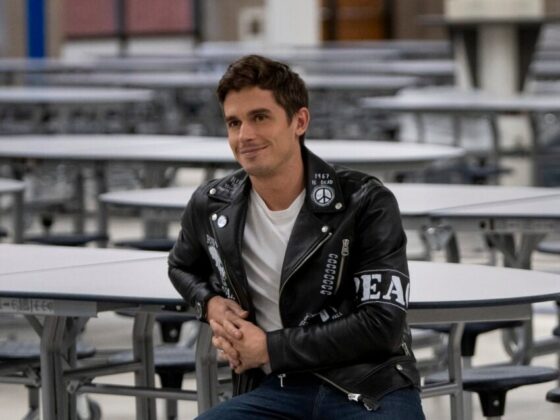

A Lego copyright fight over a jacket worn on ‘Queer Eye’ is headed toward trial
New York-based artist James Concannon sued Lego after the company released a similar jacket in its “Queer Eye” set featuring Antoni Porowski’s character.
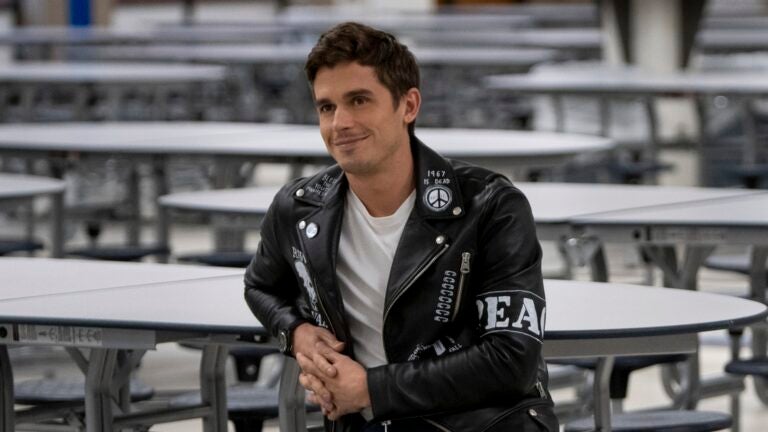
At the core of this case is a black leather jacket adorned with a peace sign, safety pins, a smiling teardrop, and a grinning skull on a small Lego figurine.
The character is modeled after Antoni Porowski, the food and wine expert on Netflix’s “Queer Eye,” who wore a similar jacket on the show. But his version, created by New York-based artist James Concannon, featured more political messages, including “MONSANTO” crossed out, “1967 is DEAD,” and “RAW WAR.”
Concannon sued Lego in 2021 in the U.S. District Court for Connecticut, where the company was previously based in the U.S. before moving its Americas headquarters to Boston last year. He alleged the company infringed his copyright, and he also brought claims for trade dress infringement and violations of Connecticut’s unfair trade practices law.
Advertisement:
This week, U.S. District Judge Omar A. Williams granted Lego’s motion for summary judgment in part, dismissing Concannon’s trade dress claim but allowing his copyright claims to proceed to trial. The judge found there was insufficient evidence that consumers would believe the Lego product was produced by Concannon.
The court ordered the parties to report by Oct. 30 whether they have resumed settlement talks or are proposing a trial schedule.
Concannon’s attorneys did not respond to a request for comment. They told Inc. that “Mr. Concannon is pleased with the outcome, and looks forward to presenting his case to a jury.”
Advertisement:
Lego did not respond to a request for comment.
[embedded content]
The players:
In 2018, Porowski commissioned Concannon to adorn a black leather jacket. The two discussed elements Netflix might find unpalatable, and Concannon added punk and graffiti-style designs and phrases, including “BLESS THE YOUTH MANIFESTO” and “AS MONUMENTS FALL TEAR DOWN THE WALLS AND SHAKE HATE’S CHAIN OFF SOCIETY’S BRAIN.” On the back, he wrote, “THYME IS ON MY SIDE.”
Porowski wore the jacket on “Queer Eye,” but the production company did not obtain Concannon’s release to depict it.
In December 2019, Lego approached “Queer Eye” producer Scout Productions about creating a construction set. Lego received a license in 2020 to use the show’s intellectual property, including the likenesses of its stars. The set launched a year later. Concannon was not involved in the set’s design and never licensed his jacket to Lego.
The resulting Porowski Minifigure came with a black leather jacket that echoed Concannon’s design.
The judge said Lego initially wanted to retain “THYME IS ON MY SIDE” on the jacket. After discussions with its legal department, the company changed the words to the Lego motto “REBUILD THE WORLD” but kept the same font and original paint drips through production and sale of the set.
Advertisement:
Concannon learned about the minifigure in September 2021. His lawyers wrote in court documents that he said he was initially “happy” to see the jacket featured in the set. He later realized, his lawyers wrote, that a “major company had misappropriated his art without credit or compensation.”
In an Instagram post, Concannon said he reached out to Lego asking for a free set.
“It was sad on the release date to be told ‘we can’t send you a box, but you can buy one,’” Concannon’s post read. “I used to really like legos. Now = intellectual property theft.”
Lego argued that Concannon had given Porowski an implied license to use the jacket as part of his likeness, which Porowski could then license to Lego. The company also argued that its version was sufficiently transformed to qualify as fair use.
Will this change the industry?
The ruling is unlikely to change how businesses operate dramatically, said John Strand of Wolf Greenfield. But he said it highlights the importance of carefully checking copyrights, releases, and licenses before using someone else’s work.
Clothing itself generally is not copyrightable, Strand said, but this case involves artwork displayed on clothing.
Advertisement:
“In other words, it’s like the canvas that the artist had used to convey the art,” he said.
Strand pointed to recent copyright cases, including disputes involving AI, the Kat Von D tattoo case, and the Supreme Court’s 2023 ruling involving Andy Warhol’s use of a photograph of Prince, as examples of the ongoing questions surrounding fair use.
“Everything’s in flux, and the punchline is businesses will just have to make sure that they are checking everything when they’re doing these deals,” he said.
Patrick Concannon, an attorney at Nutter who is not related to the artist, also said he does not view the ruling as a watershed moment. But he said companies should be increasingly thorough when clearing rights.
“There needs to be a real extensive checklist that companies need to use when clearing rights in a given product or video,” Concannon said. “The list seems to be getting longer.”
Next steps:
The ruling allows James Concannon’s copyright claims to proceed to trial. Patrick Concannon cautioned that surviving summary judgment does not mean the artist will win at trial.
“But there is a reasonable chance the plaintiff will win,” he added.

Sign up for the Today newsletter
Get everything you need to know to start your day, delivered right to your inbox every morning.


 Boston Live News